
Gamification & Education
Gamification originated in the education reform industry in the 1980s, 1970s was the time when the electronics industry was booming and education technologists in the US started to think about the possibility of introducing videos and video games in teaching to improve students’ learning efficiency and interest.
This was the earliest origin of gamification. In the beginning, this idea was more to solve the problem of serious quality decline in the field of basic education in the U.S. at that time, the teaching methods of teaching materials were sticking to the rules, and students had a high dropout rate. Teaching experts at this time introduced the game level mechanism in the classroom, introduced the classic point system of the SONY “red and white” era, introduced multimedia materials and so on. They did all this in order to make students not bored with learning.
Why the game is so attractive to the people?
First of all, let’s look at the characteristics of the game (why it’s addictive), there are 4 main points.
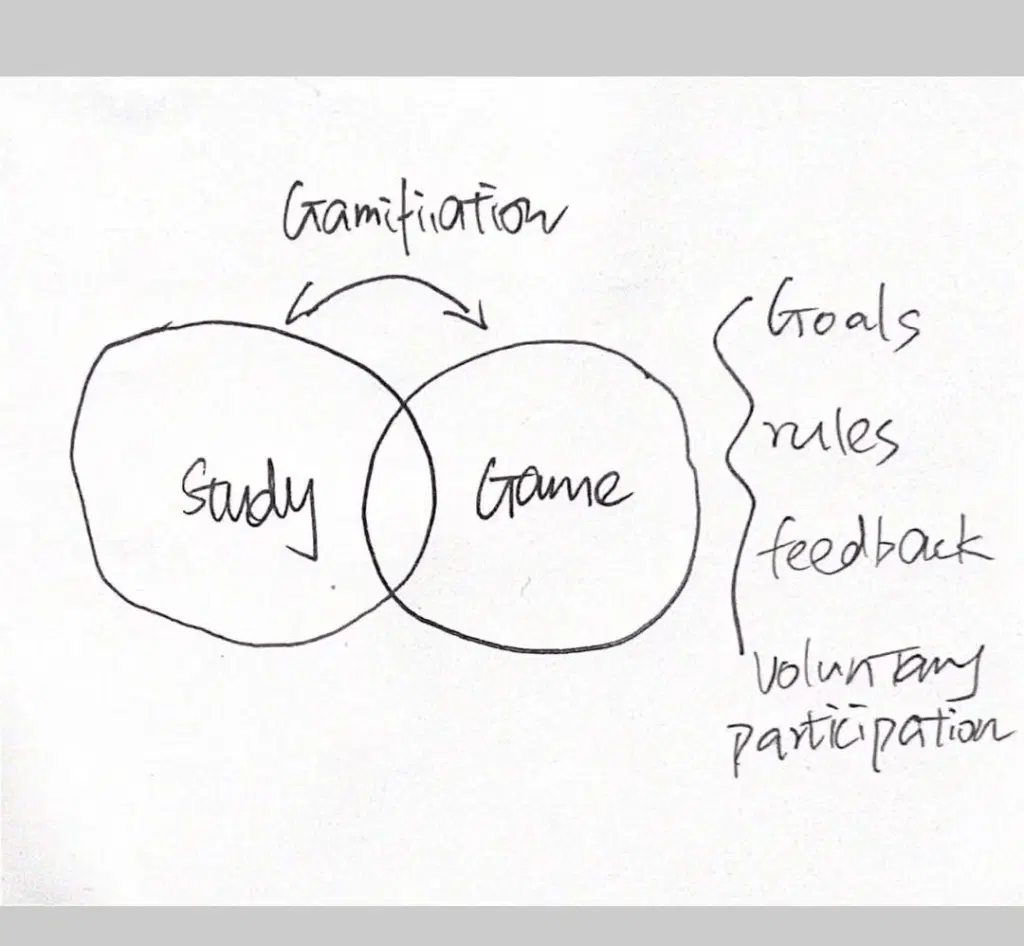
1,clear objectives, such as the goal of DOTA is to destroy enemy relic buildings and protect our relics, in the game, these goals are very clear, and the game will help you cut the goal into progressive multi-layered small goals, taking us from easy mode to hard mode, until the final showdown with the big boss.
2, rules, the game has clear rules

3, feedback system, that is, when you complete each small part, the game will tell you how far away from the final goal, we can always see the latest progress. For example, you have exceeded how many people in the world, this is the game’s instant positive feedback, giving us the motivation to continue to play. The game can bring a different sense of accomplishment
4, the fourth feature is voluntary participation, which we all know, no one will force us to play the game, you can quit anytime you want.
How can we apply it to learning?
The first is to gamify the incentive mechanism.
– Add a game feedback system to our daily life to stimulate our sense of participation, you can give yourself a little reward after completing a small goal, such as a vacation, buy some good food and fun , try to make the task more difficult, the more rewarding so that you can make you want to complete the next task!
The second, the gamification of the team mechanism.
– In fact, the company or the class can be a community platform, we as members of the community, have a common goal, you can encourage employees to cooperate with strangers more communication. When people complete these goals, they can get paid, which is equivalent to the feedback in the game.
The third is the continuity of gamification.
The game can enhance our happiness, because the feedback can make us recognize ourselves, and we will have a sense of pride and achievement when we finish the goal, no matter the process or the result is happy. In real life, we want to change a deep-rooted habit or shortcomings is very difficult, but we can slowly break these habits into small goals, so that we can complete a little at a time, and finally see hope.
Overall, the game attracts players to addiction because it constantly provides a relatively inexpensive sense of gain, of advancement. You can try to replicate this feeling in your studies. Be sure to have clear small goals to attract yourself step by step to accomplish big goals. Sid Meier, the inventor of ” Civilization”, said that “a game is a combination of interesting choices”.
Gamification teaching has to do to the point where children think learning is as fun as playing!
part 2
ELLA’s Video :
 ELLAAAA